
Edible
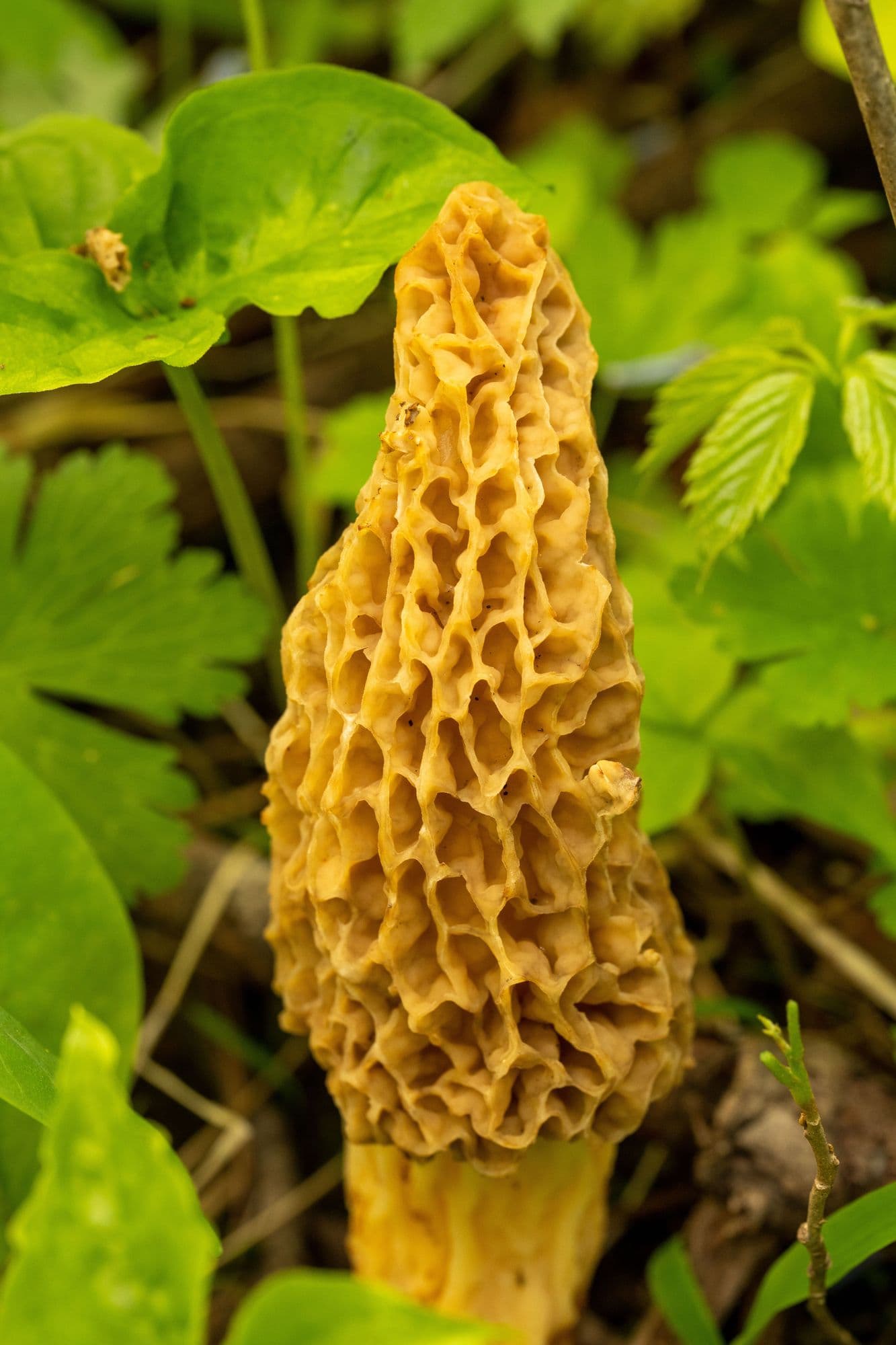
Morel
Morchella esculenta
The tellHoneycomb cap, completely hollow inside when sliced.
Mushroom photo ID
Mushrooms.id is a photo identifier for the mushrooms you find on walks, in the yard, and at the market. Snap it, see the closest matches, learn what sets them apart.
How it will work
Take a picture of the cap, the underside, and the whole stem.
See the likeliest species side by side, with the features that separate them.
Find out which detail to check next, such as spore colour or what it grows on.
Species gallery
Edible species sit next to the lookalikes people confuse them with. Each card names the feature that separates them.
Swipe for all 12
Morchella esculenta
The tellHoneycomb cap, completely hollow inside when sliced.

Gyromitra esculenta
The tellBrain-like wrinkled cap, cottony or chambered inside, not hollow.

Cantharellus cibarius
The tellBlunt false ridges that run down the stem, not true blade-like gills.

Omphalotus illudens
The tellSharp true gills, grows in dense clusters on wood, glows faintly in the dark.

Laetiporus sulphureus
The tellBright orange shelves with a yellow pore surface, no gills, grows on trees.

Amanita phalloides
The tellGreenish cap, white gills, skirt on the stem, sac-like cup at the base.

Amanita bisporigera
The tellPure white all over, skirt on the stem, bulbous base in a sac.

Amanita muscaria
The tellRed cap with white warts, the storybook mushroom.

Coprinus comatus
The tellTall shaggy white cylinder that dissolves into black ink within a day.

Calvatia gigantea
The tellSmooth white ball, often soccer-ball size, solid white all the way through when young.

Hericium erinaceus
The tellWhite cascading icicle-like spines, no cap, no gills, grows on hardwood.

Pleurotus ostreatus
The tellFan-shaped cap, gills run down a short off-center stem, grows in shelves on wood.
Where we stand
Several of the species above have deadly lookalikes, and a photo cannot check smell, spore colour, or what is under the ground. Mushrooms.id will show you the features that separate species so you know what to check next. It will never tell you something is safe to eat. Neither should any app.
FAQ
Take clear photos of the cap from above, the underside, and the full stem, including the base, which is often hidden in soil or leaves. Note what it grows on and which trees are nearby. A photo identifier compares those features with known species and shows the closest matches. Treat the result as a lead to check in a regional field guide or with a local mycological society.
A photo alone often cannot settle that. Several deadly species, including the death cap and the destroying angel, look plain and pale, and some edible species have toxic twins. Mushrooms.id will show the closest matches and flag any that are toxic or deadly. If someone has eaten a wild mushroom and feels unwell, call poison control or emergency services right away.
Look for one that shows its working: several close matches, how sure it is, and the features that separate them. Be wary of any app that gives one answer with no lookalikes, or that calls a mushroom safe to eat. Mushrooms.id is being built that way. Until it opens, a regional field guide and a local mycological society are the most reliable sources.
No. A photo cannot capture smell, spore print colour, or a base hidden underground, and those details can separate an edible species from a deadly one. Experts confirm in person, often with a spore print and a microscope. Mushrooms.id will never label a mushroom safe to eat.
We are building it now and have not set a date. Join the waitlist and we will send one email when it opens. We will not use your address for anything else.
Waitlist
We will send one email when Mushrooms.id opens, and nothing else.